
Triple Talaq Law in India: From the 2017 Bill to the Muslim Women Act, 2019
The Muslim Women (Protection of Rights on Marriage) Bill, 2017 was passed by the Lok Sabha on 28 December 2017. That Bill did not itself become the operative law. The subject is now governed by the Muslim Women (Protection of Rights on Marriage) Act, 2019, which prohibits instant and irrevocable talaq and establishes criminal penalties and protections for married Muslim women.
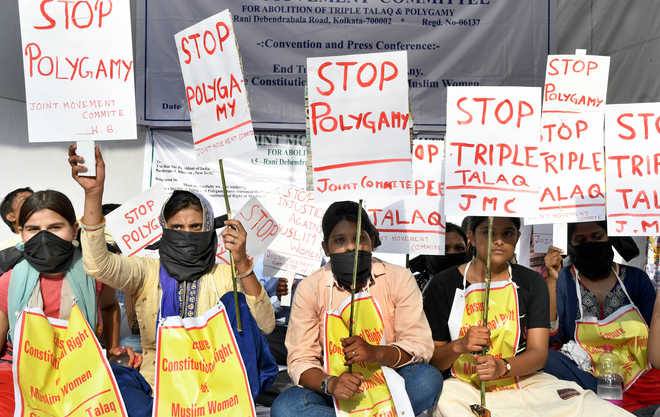
Background: the Triple Talaq Bill passed in 2017
On Thursday, 28 December 2017, the Lok Sabha passed the Muslim Women (Protection of Rights on Marriage) Bill, 2017. The proposed legislation followed concern about the practice of talaq-e-biddat, a form of instantaneous and irrevocable divorce. The objective was to protect married Muslim women from the consequences of such pronouncements, deter the practice and provide remedies concerning financial support and custody of children.
The Bill proposed that a pronouncement of instant triple talaq, whether spoken, written, electronic or otherwise, would be void and illegal. It also proposed imprisonment extending to three years and a fine, subsistence allowance for the woman and dependent children, and custody of minor children as determined by a Magistrate. These themes were carried forward into the later statutory framework, although the final 2019 Act must be consulted for the exact procedural rules.
The 2017 Bill was not the final enactment. Subsequent ordinances and parliamentary proceedings culminated in Act No. 20 of 2019, which received presidential assent on 31 July 2019. The Act is deemed effective from 19 September 2018.
Supreme Court decision in Shayara Bano v. Union of India
The legislative initiative followed the Supreme Court's decision in Shayara Bano v. Union of India (2017), in which a Constitution Bench, by a majority of 3:2, invalidated the practice of instant triple talaq. The judges reached the majority outcome through different legal reasoning. The judgment should not be read as declaring every legally recognised form of Muslim divorce unconstitutional.
The subsequent 2019 Act defines the prohibited form specifically as talaq-e-biddat or another similar form having the effect of instantaneous and irrevocable divorce.
Key provisions of the Muslim Women Act, 2019
| Provision | Meaning and legal effect |
|---|---|
| Section 1 | Short title, territorial application and commencement. The Act is deemed to have come into force on 19 September 2018; its application was subsequently extended to the Union Territories of Jammu and Kashmir and Ladakh. |
| Section 2 | Defines electronic form, Magistrate and talaq. Under Section 2(c), talaq means talaq-e-biddat or a similar form producing instantaneous and irrevocable divorce. |
| Section 3 | A pronouncement of the defined talaq by a Muslim husband upon his wife, whether oral, written, electronic or in any other manner, is void and illegal. |
| Section 4 | A husband who pronounces talaq covered by Section 3 is punishable with imprisonment for a term extending to three years and is also liable to a fine. |
| Section 5 | The married Muslim woman is entitled to subsistence allowance for herself and dependent children, in an amount determined by the Magistrate, without prejudice to other applicable laws. |
| Section 6 | The married Muslim woman is entitled to custody of her minor children in the manner determined by the Magistrate. |
| Section 7 | Sets out special rules for cognizability, compounding and bail, including safeguards involving the married Muslim woman. |
| Section 8 | Repeals the Muslim Women (Protection of Rights on Marriage) Ordinance, 2019 and preserves actions taken under it as provided by the savings clause. |
Complaint, bail and compounding under Section 7
When is the offence cognizable?
Section 7(a) makes the offence cognizable when information is given to the officer in charge of a police station by the married Muslim woman upon whom talaq was pronounced or by a person related to her by blood or marriage. Cognizable means that police may act in accordance with the statutory framework without first obtaining a Magistrate's order to investigate.
Can the offence be compounded?
Yes. Under Section 7(b), the offence is compoundable at the instance of the married Muslim woman, with the Magistrate's permission and on terms and conditions determined by the Magistrate. Compounding is a legally recognised settlement of the criminal offence, subject to these safeguards.
Is bail available?
Section 7(c) provides that a person accused of an offence punishable under the Act shall not be released on bail unless the Magistrate, on an application by the accused and after hearing the married Muslim woman, is satisfied that there are reasonable grounds for granting bail. This is a special bail condition, not an absolute prohibition on bail.
For proceedings initiated under current criminal procedure, the Bharatiya Nagarik Suraksha Sanhita, 2023 is also relevant, subject to the special provisions of the 2019 Act and applicable transitional rules.
Purpose and objects of the original legislation
The statement of objects and reasons accompanying the 2017 proposal stressed the need to prevent continued hardship arising from instant triple talaq and to provide relief to affected married Muslim women. It contemplated declaring the practice void and illegal, creating a punishable offence and providing subsistence allowance and arrangements for minor children. These objectives explain the historical background, but the enacted provisions of the 2019 Act govern legal rights and liabilities today.
Frequently asked questions
Does saying triple talaq instantly dissolve the marriage?
No. A pronouncement falling within the statutory definition of talaq-e-biddat or a similar instantaneous and irrevocable form is void and illegal under Section 3 of the 2019 Act.
Is every form of Muslim divorce punishable under this Act?
No. The statutory definition is specific to talaq-e-biddat and similar instantaneous and irrevocable forms. The application of the law depends on the facts and the form of pronouncement.
Can the wife claim financial support and custody?
Sections 5 and 6 provide for subsistence allowance and custody of minor children, with the relevant determination made by the Magistrate.
Read the 2017 Bill and the current 2019 Act
Download the original Muslim Women (Protection of Rights on Marriage) Bill, 2017 (PDF). This historical document was linked in the original article and is retained here.
Read the enacted Muslim Women (Protection of Rights on Marriage) Act, 2019 (official India Code PDF). See also the India Code legislation record.