
Ran Vijay Singh v State of UP: Supreme Court on Answer Sheet Revaluation
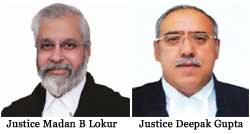
In Ran Vijay Singh and Others v. State of Uttar Pradesh and Others, Civil Appeal No. 367 of 2017 and connected appeals, the Supreme Court of India addressed the limits of judicial intervention in the re-evaluation of examination answer sheets. The judgment, delivered on 11 December 2017 by Justices Madan B. Lokur and Deepak Gupta, arose from a prolonged dispute over the selection of Trained Graduate Teachers (Social Science) in Uttar Pradesh.
Background of the teacher recruitment dispute
On 15 January 2009, the U.P. Secondary Education Services Selection Board advertised recruitment for Trained Graduate Teachers in Social Science under the then-applicable U.P. Secondary Education Services Selection Board Act, 1982 and the rules framed under it. More than 36,000 candidates appeared for the objective-type written examination using optical mark recognition (OMR) answer sheets.
The written examination results were announced on 18 June 2010. Interviews took place from 16 to 26 July 2010, and the combined selection result was declared on 14 September 2010. Several unsuccessful candidates challenged the examination and disputed the official answers to seven questions.
Some writ petitions were initially dismissed because the applicable statutory framework did not provide a right to re-evaluation. A different Single Judge subsequently directed re-examination of the answer sheets of 77 petitioners on 8 February 2012. The Board then undertook a wider re-evaluation and announced revised results on 10 September 2012. Further litigation followed, and a final select list published on 12 May 2014 excluded certain candidates who had previously appeared in the selection lists.
On 28 April 2015, a Division Bench referred the seven disputed questions to a one-member expert committee. Following its report, the High Court ordered another evaluation on 2 November 2015. The third evaluation was carried out while the Supreme Court appeals were pending, and its results were kept in a sealed cover.
Legal issue: when can answer sheets be re-evaluated?
The central issue was whether a court exercising judicial review could order scrutiny or re-evaluation of examination answers where the governing law did not expressly grant that right, and how far judges could intervene in the technical assessment of disputed answer keys.
Five principles stated by the Supreme Court
- Express statutory permission: If the governing statute, rules or regulations permit scrutiny or re-evaluation as a right, the examination authority may allow it in accordance with those provisions.
- Silence in the rules: If the framework does not provide for scrutiny or re-evaluation, as distinct from expressly prohibiting it, a court may intervene only in rare or exceptional cases where a material error is clearly demonstrated without speculative or inferential reasoning.
- Academic expertise: Courts should not themselves scrutinize or re-evaluate answer sheets; academic questions are best left to competent experts.
- Presumption about answer keys: Official key answers should ordinarily be presumed correct.
- Benefit of doubt: Where there is doubt, the benefit ordinarily goes to the examination authority rather than to the candidate.
The Court also emphasized that sympathy for candidates is not a substitute for the applicable legal test. Errors in a public examination can affect many candidates, and repeated re-evaluations may cause prolonged uncertainty across an entire recruitment exercise.
Final directions in the 2017 judgment
To bring the eight-year dispute to a practical conclusion, the Supreme Court disposed of the appeals and issued three significant directions:
- The Board was to declare, within two weeks, the results prepared following the High Court decision of 2 November 2015.
- Trained Graduate Teachers already appointed and working on the basis of earlier declared results were not to be removed merely because they became unsuccessful in the third results.
- Newly successful candidates following the third declaration were to be appointed by the State by creating supernumerary posts, without consequential benefits.
Meaning of supernumerary posts: These are additional posts created beyond the normal sanctioned strength to accommodate persons in specified circumstances. The directions in this judgment were case-specific and do not automatically entitle candidates in other recruitment disputes to similar posts.
Judicial discipline and coordinate benches
The Court expressed concern that a Single Judge had entertained substantially similar writ petitions even after another Single Judge had dismissed earlier petitions on the same issues. It stressed that a judge who disagrees with a coordinate bench should follow the established procedure for reference to an appropriate larger bench rather than simply disregard the earlier view.
Applicable legal provisions and subsequent developments
Article 226 of the Constitution of India
Article 226 empowers High Courts to issue writs, directions and orders for enforcement of fundamental rights and for other purposes. In examination disputes, this jurisdiction remains subject to the principles of judicial restraint and deference to specialized academic assessment articulated in Ran Vijay Singh.
U.P. Secondary Education Services Selection Board Act, 1982
This legislation governed the recruitment process underlying the 2009 examination and the 2017 litigation. The Supreme Court examined the absence of an applicable provision conferring a general right to re-evaluation. The Act is relevant to understanding the historical dispute but should not be presented as the current governing enactment.
Uttar Pradesh Education Service Selection Commission Act, 2023
Under Section 31(1) of the Uttar Pradesh Education Service Selection Commission Act, 2023 (U.P. Act No. 15 of 2023), the 1982 Board Act and certain other earlier selection enactments were repealed. Section 31(2) preserves acts and actions taken under the repealed legislation by deeming them to have been done under the 2023 Act. Section 31(3) preserves the general operation of Section 6 of the Uttar Pradesh General Clauses Act, 1904, subject to the new Act. Section 30 gives the 2023 Act overriding effect in specified teacher and instructor selection matters where inconsistent rules or statutes would otherwise apply.
The 2023 law changes the institutional statutory framework; it does not by itself displace the Supreme Court's general judicial-review principles. For a current examination, the applicable recruitment notification, rules and any specific scrutiny or re-evaluation provisions must be examined separately.
Subsequent Supreme Court treatment
The principles of Ran Vijay Singh, reported at (2018) 2 SCC 357, have been discussed and applied in later Supreme Court decisions on disputed answer keys and examination evaluation. The governing rules and the nature of the alleged error remain decisive in each case.
Practical significance
Candidates challenging an examination should identify a specific, demonstrable error and the exact provision of the governing rules that permits scrutiny, objections or re-evaluation. Examination bodies should publish clear procedures, apply consistent academic review and avoid repeated changes that destabilize completed recruitment processes. Courts will generally refrain from acting as examiners.
Read the Supreme Court judgment
Download the original Supreme Court judgment dated 11 December 2017 (PDF). The original document remains available below for reading.
Official legal sources
- Uttar Pradesh Education Service Selection Commission Act, 2023 - official statutory text
- U.P. Secondary Education Services Selection Board Act, 1982 - historical legislation
- Supreme Court subsequent discussion of Ran Vijay Singh principles (2018)
This article provides general legal information. Recruitment disputes depend on the governing rules, facts and applicable judicial decisions.