
Patna Police FIR Status and Copy Online: How to Check and Download
If you filed a complaint or First Information Report (FIR) with Patna Police, this guide explains how to follow up, distinguish an online complaint from a registered FIR, and obtain a copy under the Bharatiya Nagarik Suraksha Sanhita, 2023 (BNSS).
Official places to start
Open the Bihar Police official website and look for citizen services, FIR-related information or contact details. The Government of Bihar portal can also help identify official state services. Availability of public FIR search or download features may change and some records are restricted.
How to check your complaint or FIR status in Patna
- Collect your reference details. Keep the complaint acknowledgement, complaint number or FIR number, police station name, date of occurrence and registered mobile number.
- Use official police services. Visit the Bihar Police website and follow any currently available citizen-service or FIR-status links. Avoid entering personal data into unofficial portals.
- Check the correct record. If the service requests a complaint number, it may show only complaint processing. A registered FIR is normally identified by its FIR number, police station and year.
- Contact the police station if necessary. Ask the duty officer or investigating officer whether an FIR has been registered, its number, the investigating officer's details and how to obtain a copy.
- Follow up on investigation. A complaint being marked verified or forwarded does not necessarily mean the investigation has concluded. Request updates through the investigating officer or appropriate supervisory police authority.
How to obtain a copy of the FIR
BNSS Section 173(2) provides that a copy of information recorded under Section 173(1) shall be given forthwith, free of cost, to the informant or the victim. If you are the informant or victim, request the FIR copy from the police station concerned, giving the FIR number and identifying details. If the record is available through an authorised online service, you may use that route as well.
Public access to FIR documents is not unrestricted. Sensitive cases, including certain sexual offences and cases involving children, may be withheld or redacted according to applicable law and judicial directions. A publicly downloadable copy is not guaranteed for every FIR.
Applicable legal provisions explained
BNSS Section 173 - Information in cognizable cases
Section 173(1) governs recording information about a cognizable offence, including information given orally or by electronic communication. Electronic information must be signed by the person giving it within three days to be taken on record in the manner prescribed. It also permits reporting regardless of the area where the offence occurred, commonly described as Zero FIR.
Section 173(2) provides for a free copy to the informant or victim. Section 173(4) provides a route to the Superintendent of Police when an officer in charge refuses to record information of a cognizable offence, with a further remedy before the Magistrate.
BNSS Section 174 - Information as to non-cognizable cases
Section 174 concerns information about non-cognizable offences. Police ordinarily enter the substance of the information and refer the informant to the Magistrate; investigation generally requires a Magistrate's order. A complaint acknowledgement under this process should not be mistaken for an FIR in a cognizable case.
BNSS Section 175 - Police power to investigate cognizable cases
Section 175 sets out police powers to investigate cognizable cases and the Magistrate's power to order an investigation subject to statutory conditions. FIR registration, investigation progress and final police reports are separate stages.
Read the statutory text through the India Code official legislation portal. The BNSS generally replaced the Code of Criminal Procedure, 1973, from 1 July 2024, subject to applicable transitional provisions.
Earlier Patna Police complaint verification process
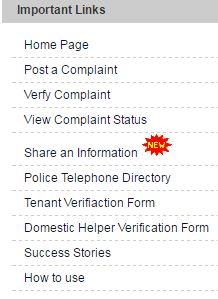
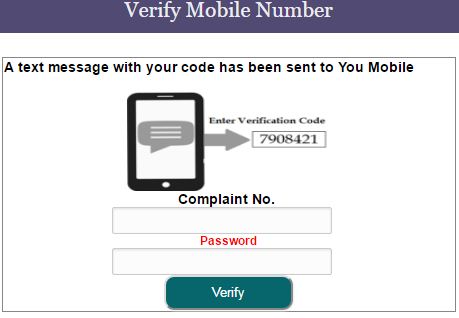
The earlier website described a complaint verification and status-search process involving a verification code, complaint number and password. Users were directed to the former Patna Police complaint application, followed by a complaint verification page and a status search form. That address and workflow are retained here as historical reference only; they should not be relied upon as a currently operational official service.
The original illustrations are preserved below for readers comparing an old acknowledgement with the former system:
If the FIR or complaint status is not available
- Verify the police station and the year of the FIR, and distinguish the FIR number from a complaint reference number.
- Ask the investigating officer for the current procedural status and a copy of the FIR where you are entitled to one.
- If the police refuse to record information about a cognizable offence, consider the remedy under BNSS Section 173(4).
- For immediate danger call 112. For cyber financial fraud, promptly call 1930 and use the National Cyber Crime Reporting Portal.
Frequently asked questions
Can I download every FIR filed in Patna online?
No. Public access depends on the official portal and applicable disclosure restrictions. Obtain a copy from the police station if an online copy is unavailable.
Is a complaint reference number the same as an FIR number?
No. An online complaint acknowledgement does not itself establish that a First Information Report has been registered.
Is an FIR copy free for the informant?
Yes. Section 173(2) of the BNSS requires a free copy of the recorded information to be given forthwith to the informant or victim.
What if police refuse to record a cognizable offence?
Under BNSS Section 173(4), the substance of the information may be sent in writing and by post to the Superintendent of Police. The statutory process also provides for approaching a Magistrate.
Related Indian case-law guides
This guide is general legal information. Portal menus, disclosure rules and procedural requirements may change. Confirm case-specific information with the competent police station or a qualified legal professional.