
How to File an Online Police Complaint or FIR in Gurugram, Haryana
Residents of Gurugram (formerly Gurgaon) can use Haryana Police citizen services to submit information or a complaint online. A complaint acknowledgement is not necessarily a registered First Information Report (FIR). This guide explains the process and the current legal rules.
Official Haryana Police complaint and citizen services portal
Visit the official Haryana Police website and select Citizen Services or Citizen Login. The portal offers citizen-facing police services, including information submission and FIR download. Haryana Police explains that an online complaint may be routed to the district office and then to the police station for verification; the portal submission alone does not prove an FIR has been registered.
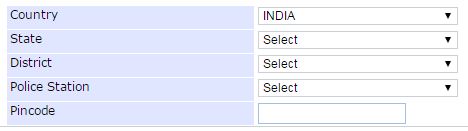
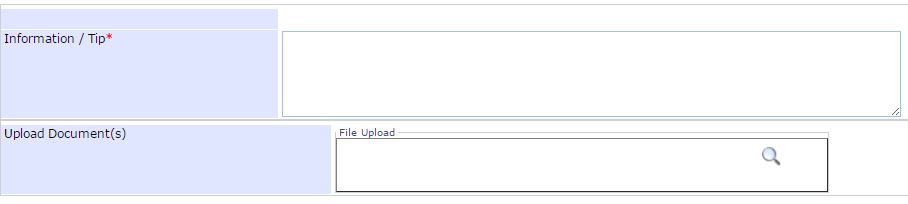
Older instructions linked to a legacy Haryana Police complaint form. Its screen layout and availability may have changed, so use the current official portal rather than relying on the historical link.
Steps to submit an online complaint in Gurugram
Step 1: Open Citizen Services
Open the Haryana Police portal, select the relevant complaint or information service, and sign in or register if requested. Follow the current on-screen instructions.
Step 2: Provide complainant and contact information
Enter your name, mobile number, email address and residential address as requested. Older versions of the form also displayed fields for first, middle and last name, landline, UID/Aadhaar, house number, street, locality, city or village, tehsil, state, district, police station and PIN code. Provide identity numbers only if the official service legitimately requires them; avoid sharing sensitive details unnecessarily.
Step 3: Describe the incident accurately
Choose the nature of information or complaint, and state the date, approximate time, place, sequence of events, persons involved (if known), witnesses, property or documents affected, and any immediate safety concerns. Include suspect details only if you know them; do not speculate or accuse without a factual basis.
Step 4: Upload supporting documents if offered
Attach relevant records, such as receipts, screenshots, correspondence, photographs, or a copy of a lost certificate, where the portal allows attachments. Preserve originals and any electronic evidence.
Step 5: Select the district and police station
If the form asks whether you know the police station, choose the appropriate option and select Gurugram district and the station if known. Under BNSS Section 173(1), information about a cognizable offence may be given irrespective of where the offence occurred (often called a Zero FIR); uncertainty about jurisdiction should not prevent reporting.
Step 6: Submit and preserve the acknowledgement
Review the details, submit the form and save any reference number or receipt. Follow up with the police station about whether an FIR was registered and whether a signature or additional verification is required.
Illustrations of the older Haryana Police form
The following archived screenshots are retained for reference. They may not match the current portal interface.




FIR registration under Section 173 of the BNSS, 2023
The Bharatiya Nagarik Suraksha Sanhita, 2023 (BNSS) replaced the Code of Criminal Procedure, 1973 for the general criminal procedure framework from 1 July 2024, subject to applicable transitional provisions.
- Section 173(1): Information relating to a cognizable offence may be given orally or by electronic communication to the officer in charge of a police station, irrespective of territorial jurisdiction. Cognizable generally means an offence for which police may arrest without warrant under the applicable law.
- Electronic information: Under Section 173(1)(ii), electronically supplied information is taken on record on being signed by the informant within three days. A web submission should not be mistaken for a completed FIR merely because it generated a receipt.
- Section 173(2): A copy of the recorded information must be given free of cost to the informant or victim.
- Section 173(3): For specified cognizable offences punishable with three years or more but less than seven years, the officer in charge may, with prior permission of an officer not below Deputy Superintendent of Police, conduct a preliminary enquiry within fourteen days to ascertain whether a prima facie case exists, or proceed with investigation where a prima facie case exists, having regard to the nature and gravity of the offence.
- Section 174: Information about a non-cognizable offence is entered in the prescribed record and the informant is referred to the Magistrate; police ordinarily require a Magistrate's order to investigate a non-cognizable case.
For the statutory text, see the BNSS official government-hosted PDF. The Ministry of Home Affairs has also clarified the three-day signature requirement for electronic FIR information.
What if the police refuse to register a cognizable offence?
Under BNSS Section 173(4), a person aggrieved by refusal to record information under Section 173(1) may send the substance of the information in writing and by post to the Superintendent of Police concerned. If satisfied that the information discloses a cognizable offence, the Superintendent may investigate or direct an investigation by a subordinate officer. If that remedy does not succeed, an application may be made to the Magistrate under the applicable provisions, including Section 175(3), subject to its statutory requirements.
How to obtain an FIR copy or check its status
Use the Haryana Police Citizen Services page and look for FIR Download. Availability of a downloadable copy depends on the case and applicable disclosure restrictions. Keep the FIR number, police station, district and year handy. For additional guidance, see Haryana Police FIR copy and tracking guide.
Lost documents and other information reports
The former Haryana Police online information form was commonly used to report missing documents or articles. A lost-property report or online information submission is not automatically an FIR. Whether an FIR is required depends on whether the facts disclose a cognizable offence, such as theft rather than an accidental loss.
Frequently asked questions
Can I register an FIR entirely online in Gurugram?
You can send information electronically through official channels, but Section 173(1)(ii) requires the informant's signature within three days for electronic information to be taken on record. Follow the police's instructions for completing the process.
Can I report a crime outside my local police station?
Yes. Section 173(1) allows information about a cognizable offence to be given irrespective of the area where it was committed.
Is an online complaint number the same as an FIR number?
No. A complaint acknowledgement confirms submission; an FIR number identifies a formally registered FIR.
Is an FIR copy free?
Yes. Section 173(2) provides for a free copy of the recorded information to the informant or victim.
This article is general legal information, not individual legal advice. Portal features and administrative procedures may change; verify the current workflow on the official police website.
Related legal research and case-law guides
Hindu Marriage Act Case laws | Divorce Act Case Laws | Domestic Violence Act Citations | 125 CRPC Case Laws and Citations | Section 498A IPC Case Laws | CRPC - Code of Criminal Procedure | CPC Important citations, case laws | Indian Penal Code Case Laws | Perjury Case laws and citations | Maintenance case decision favouring husbands