
Police complaint and criminal procedure | Updated 20 October 2026
How to File an Online Complaint with Himachal Pradesh Police and Register an FIR
Himachal Pradesh Police provides an official citizen portal for submitting complaints, accessing police services and viewing FIR information. This guide explains the online process, the legal difference between a complaint and an FIR, and the remedies available under Indian criminal procedure.
Official Himachal Pradesh Police online complaint portal
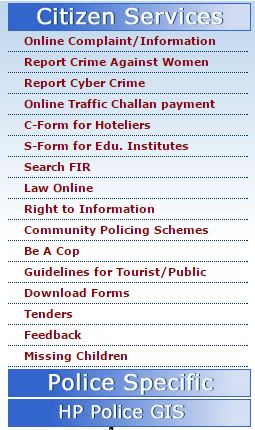
Use the HP Police Citizen Portal. Its official services include Online Complaint, View FIR, and other citizen services. The official police FAQ explains how to register and trace complaints. The former HIMPOL website and old complaint links shown in earlier guides may no longer reflect the current interface.
Steps to submit an online complaint
- Open the official portal: Visit Himachal Pradesh Police Citizen Portal and choose the online complaint service.
- Register or sign in: Follow the portal instructions for account creation or login. The official FAQ describes logging in with a user ID and password before selecting Register New Complaint.
- Choose the police jurisdiction: Where prompted, select the relevant district and police station. If uncertain about jurisdiction, explain the place of occurrence clearly; information about a cognizable offence can be provided regardless of territorial jurisdiction under BNSS Section 173(1).
- Describe the incident: Provide the date, time, place, sequence of events, alleged offence, people involved (if known), and relevant evidence. Do not speculate or knowingly provide false information.
- Enter complainant information: Supply the name, contact number, email address, permanent or correspondence address and other fields required by the current form. Complete any captcha or verification.
- Submit and save the reference: Check the details, submit, and retain the complaint number or acknowledgement, if issued. Follow instructions for any subsequent verification or signature.
- Track the complaint: Use the portal's complaint status service. The official FAQ describes selecting complaint status search, entering the complaint number and viewing the status.
What details should the complaint contain?
The original online form requested the district, police station, complaint type (such as complaint, information or crime against women), incident details, complainant's name, relationship details, permanent and correspondence addresses, telephone or mobile number, email and security code. Current fields may differ. Include supporting records, screenshots or documents where the portal permits them, and keep copies for your records.
Earlier Himachal Pradesh Police form screenshots
These images document the older interface and are retained for reference only. Follow the live official portal rather than the pictured layout.

Legal provisions governing FIR registration in Himachal Pradesh
The Bharatiya Nagarik Suraksha Sanhita, 2023 (BNSS), in force from 1 July 2024, governs the recording of information about criminal offences. The relevant provisions are:
Section 173(1) BNSS - Information in cognizable cases
Information relating to a cognizable offence (an offence for which police may arrest without a warrant in accordance with law) may be given orally or electronically to the officer in charge of a police station, irrespective of where the offence occurred. This enables the practice commonly called Zero FIR. Electronically communicated information must be signed by the informant within three days for it to be taken on record under the statutory procedure.
Section 173(2) BNSS - Free copy
The informant or victim must be provided, forthwith and free of cost, a copy of the information recorded under Section 173(1).
Section 173(3) BNSS - Preliminary enquiry in specified cases
For cognizable offences punishable with imprisonment of three years or more but less than seven years, the officer in charge may, with prior permission from an officer not below the rank of Deputy Superintendent of Police and having regard to the nature and gravity of the offence, conduct a preliminary enquiry within fourteen days to ascertain whether a prima facie case exists, or proceed with investigation when a prima facie case exists.
Section 173(4) BNSS - Remedy if police refuse to record information
If the officer in charge refuses to record information under Section 173(1), the aggrieved person may send the substance of the information in writing and by post to the Superintendent of Police. If the statutory conditions are met, the Superintendent may investigate or direct an investigation. A further application to the Magistrate is available under the procedure prescribed by law, including Section 175(3) BNSS.
Section 174 BNSS - Non-cognizable information
For a non-cognizable offence, police generally record the substance of the information and refer the informant to the Magistrate; investigation ordinarily requires a Magistrate's order. A complaint entry is not necessarily an FIR.
Complaints concerning women and vulnerable persons
Section 173(1) BNSS contains special safeguards for recording information concerning specified offences against women under the Bharatiya Nyaya Sanhita, 2023. In applicable cases, information must be recorded by a woman police officer or woman officer. Additional protections apply to persons with specified physical or mental disabilities, including recording at a suitable place with appropriate assistance and videography.
What happens after submission?
The police may review the information, contact the complainant for clarification, require signature or verification for electronically reported cognizable offences, register an FIR where legally required, or process a non-cognizable complaint under the applicable procedure. A confirmation message or complaint reference should not be described as an FIR number unless an FIR has actually been registered.
How to view an FIR or track a complaint
Return to the HP Police Citizen Portal and choose View FIR or the relevant status service. Access to particular FIR details may be limited by law or privacy restrictions. For additional guidance, see Himachal Pradesh Police FIR copy and status guide.
Emergency and cybercrime reporting
For urgent police assistance, dial 112. For suspected cyber financial fraud, promptly contact 1930 and use the National Cyber Crime Reporting Portal. The official HP Police telephone directory lists police contact and helpline information.
Frequently asked questions
Can an online complaint automatically become an FIR?
No. An online complaint acknowledgement is not necessarily an FIR. For information about a cognizable offence, Section 173 BNSS governs recording of the FIR, including the signature requirement for electronically submitted information.
Can I report an offence outside my local police station?
Yes. Section 173(1) BNSS allows information about a cognizable offence to be given regardless of the area where it occurred, commonly called Zero FIR.
Is a copy of the FIR free?
Yes. Section 173(2) BNSS provides a free copy of the information recorded to the informant or victim.
What if police refuse to record a cognizable offence?
Under Section 173(4) BNSS, the aggrieved person may send the substance of the information in writing by post to the Superintendent of Police and, if necessary, approach the Magistrate under the prescribed procedure.
Related legal judgments and guides
Legal information is general in nature. Portal screens, available services and procedures may change. For an urgent or case-specific issue, contact the police or obtain professional legal advice.